
Tap a Word Without Splitting Its Letters

When a tapping exercise keeps adding extra letters, the pauses deserve as much attention as the presses. TEN is a useful diagnostic word: T is one dash, E is one dot, and N combines a dash with a dot.
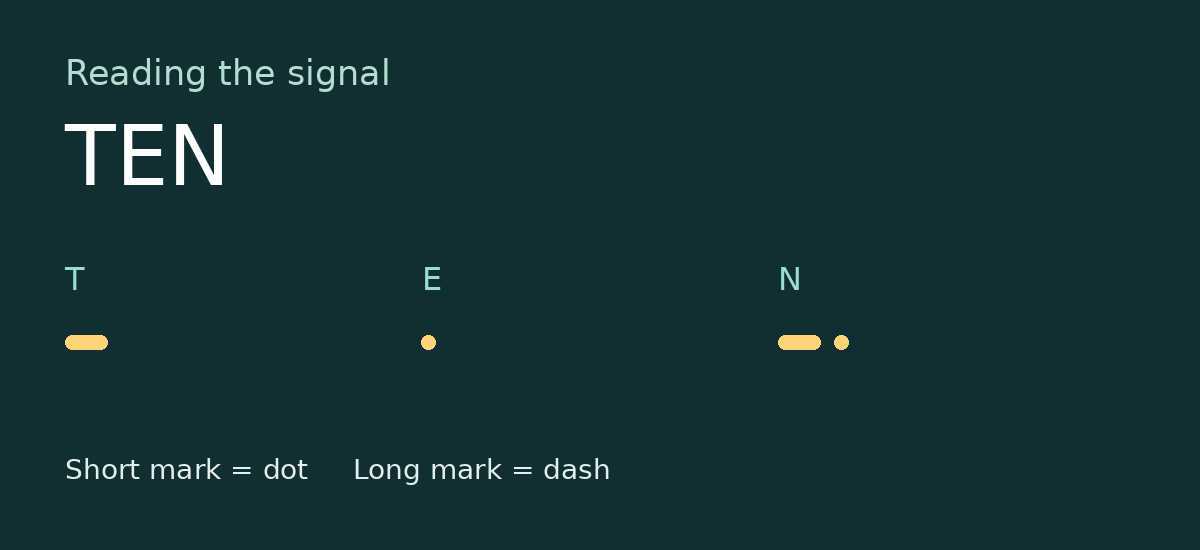
Practice the difficult transition
Start by tapping N alone. Hold the first press about three times as long as the second and keep the gap between them short. If the result reads TE, the decoder heard a letter boundary in the middle. Shorten that gap before changing the lengths of both presses.
Put the word back together
Tap TEN as - . -.. Pause deliberately after T and E, then keep the two parts of N close. Compare your result with the translator’s playback at a comfortable speed. Once TEN reads correctly twice, try TEN TEN and make the gap between the words longer than any gap between letters.
The working control is Tap to decode on the home page. A press shorter than two time units is a dot, and a longer press is a dash. A gap shorter than two units stays inside the current letter. A gap of two units finishes that letter. Leave about five units before the next word. There is no separate tap page.